Go to the People. Live with them. Learn from them. Love them. Start with what they know. Build on what they have. But with the best leaders, when the work is done, the task accomplished, the people will say, 'We have done this ourselves'.
Lao Tzu


Welcome to Resource and Support Centre for Development (RSCD)!
RSCD was established in the year 1994, with a view to promote and build a network of organisations who works with the grassroots and aim at building a society where equal and appropriate opportunities are ensured to the deprived sections and they live in dignity, justice and freedom.
OUR OUTREACH & IMPACT
4,450 - WALL Training for Elected Women Leaders
4,450 - WALL Training for Elected Women Leaders
4,450 - WALL Training for Elected Women Leaders

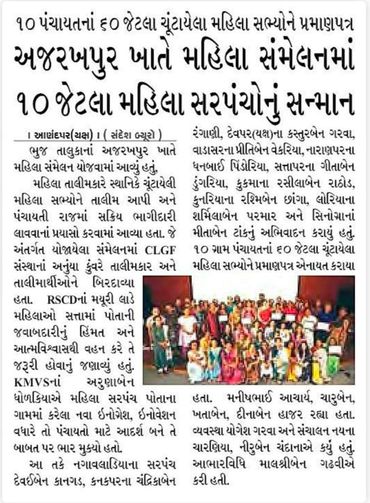
Women as Local Legislature (WALL) Trainings in partnership with the Commonwealth Local Government Forum – CLGF
16,000 - Gram Panchayat Induction Training
4,450 - WALL Training for Elected Women Leaders
4,450 - WALL Training for Elected Women Leaders
Gram Panchayat Induction Training collaboration with MAVIM
28 + Research & Development
4,450 - WALL Training for Elected Women Leaders
28 + Research & Development
Research and Study
1,700 + VDC
45,000 BOSS COURSE
28 + Research & Development
Trained Village Development Committees
400 + PRI
45,000 BOSS COURSE
45,000 BOSS COURSE
Trainers Trained in PRI
45,000 BOSS COURSE
45,000 BOSS COURSE
45,000 BOSS COURSE
BOSS Course for EWR's & Potential Women leaders
5,000 + GENDER
10 + POLICY AMENDMENTS
5,000 + GENDER
Gender & Climate Change Dialogue through campaign
2,000 + SDG
10 + POLICY AMENDMENTS
5,000 + GENDER
Localising SDG 3 & 5
10 + POLICY AMENDMENTS
10 + POLICY AMENDMENTS
10 + POLICY AMENDMENTS
Making Maharashtra Strong
Our Esteemed Partners & Collaborators













OUR BEST PRACTICES
BOSS Course: Door Step Education for Women Empowerment
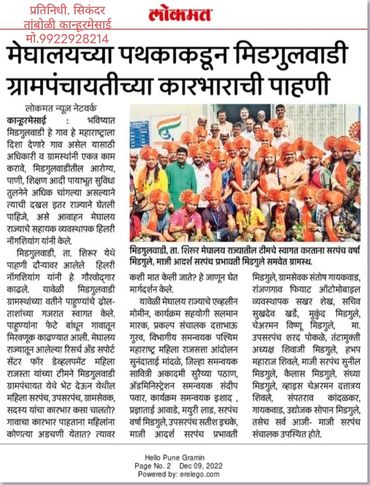
Gram Panchayat Darshan: Learning Through Panchayat Exposure
Gram Panchayat Darshan: Learning Through Panchayat Exposure
The BOSS Course provides elected women leaders with convenient learning opportunities right at their doorsteps. Covering crucial topics such as the Panchayat Raj System, Gram Panchayat budget, Government orders, village institutions and services, and village development schemes, this long-distance education program aims to train and guide elected women representatives in fulfilling their Panchayat duties effectively while managing their household responsibilities effortlessly.
Gram Panchayat Darshan: Learning Through Panchayat Exposure
Gram Panchayat Darshan: Learning Through Panchayat Exposure
Gram Panchayat Darshan: Learning Through Panchayat Exposure
Traditionally, decision-making in villages was dominated by elders, leaving women and marginalized groups with little say. Our Gram Panchayat Darshan program offers elected women representatives hands-on exposure to local government institutions, helping them navigate and influence grassroots governance more effectively.
Flag Hosting: Recognizing Women's Leadership
Gram Panchayat Darshan: Learning Through Panchayat Exposure
Krantijyoti Training: Innovative Governance Education
In January 2003, the Maharashtra government made a ground-breaking decision by passing a resolution mandating that only the village Sarpanch, regardless of gender, shall hoist the national flag on Republic Day and Independence Day.
This means that if a woman holds the position of Sarpanch, she is entrusted with the responsibility of hoisting the flag. In the event of her absence, the duty falls to the next-ranking woman in the hierarchy.
Krantijyoti Training: Innovative Governance Education
Raj Sattetlya Karbharni: Documenting Women’s Political Journeys
Krantijyoti Training: Innovative Governance Education
The Krantijyoti training is a unique and thorough program developed by former EWRs in collaboration with field experts, focusing on practical governance of Village Panchayats, social issues, and personality development.
This training approach utilizes creative mediums such as songs, slogans, games, role-plays, and demonstrations instead of relying on dense literature.
Raj Sattetlya Karbharni: Documenting Women’s Political Journeys
Raj Sattetlya Karbharni: Documenting Women’s Political Journeys
Raj Sattetlya Karbharni: Documenting Women’s Political Journeys
A study across the country was done by the Ministry of Panchayati Raj in 2007-08. It looked at women who were elected representatives (EWRs). Before, people thought these women were just standing in for their male relatives. But the study found that when given the chance, women can do just as well as men in politics.
Vanikarbharnichi: Connecting Through Technology
Raj Sattetlya Karbharni: Documenting Women’s Political Journeys
Raj Sattetlya Karbharni: Documenting Women’s Political Journeys
Vanikarbharnichi, a mobile voice message, represents a creative and efficient application of basic mobile technology.
It aims to connect with EWRs directly at their homes to educate them on governance matters related to Village Panchayats and offer them timely updates on different government schemes and policies.
About Resource and Support Centre for Development

Our Vision
Our Mission
Our Mission
A more equity society where the marginalized, mainly tribal, Dalit and women are partners in nation building without discrimination.
Our Mission
Our Mission
Our Mission
Establish and nurture network bodies of local voluntary organizations, development agencies, actors and committed people who believe in the potential of the marginalized and enable them to become actors of their own development.
Our Passion
Our Mission
Our Passion
Women in power with nurtured minds, great hearts, true faith and ready hand.
Our Values
Our Mission
Our Passion
- Social Justice
- Transparency in its Operation
- Collectivism as against Individualism
- Gender Equality
- Solidarity in moments of Crisis
- Advocacy of the cause of marginalized
- Role and group accountability to the community development role
Our Stories
MAGIC!
Fight to Dignity!
Visionary!

RSCD walked with me every step of the way.”
– Shardha Shende, Sarpanch, Bela Gram Panchayat
When I was first elected as the Sarpanch of Bela Gram Panchayat, I carried both hope and hesitation. I wanted to serve my people, but the responsibilities of governance felt heavy. That is when RSCD entered my journey, not as an outsider, but as a true peer partner.
Through the BOSS course, I gained the skills to understand budgets, schemes, orders & services of Gram Panchayats and how to make the Gram Panchayat work for the people. RSCD was there in moments of crisis, giving me courage and showing me practical ways to solve problems. Their handholding support never made me feel alone. every step, from planning to execution, I knew there was someone to guide me.
Today, when Bela Gram Panchayat has won the Majhi Vasundhara Award, I feel proud not only for my village but for the path we have created together. RSCD did not just train me. it shaped my confidence, sharpened my vision, and reminded me that women in governance are not just participants, we are leaders of change. My leadership is my people’s strength, but the wings to fly came from RSCD.
Visionary!
Fight to Dignity!
Visionary!
“Protecting our environment is protecting our future”
– Prajakta Rode, Ex Woman Sarpanch, Ambegaon, Pune
As the woman Sarpanch of my village, I drew strength and inspiration from the Paryavaran Karbharani initiative of RSCD, which taught me that safeguarding our water, forest, and land is not just governance, but a responsibility towards future generations. Through this initiative, RSCD guided and supported us to turn ideas into action and to weave environment into the heart of local governance.
With the encouragement and training provided under RSCD’s Paryavaran Karbharani initiative, we created waste management systems in the village, revived our pond, built soak pits, and promoted rainwater harvesting in every household. More than 10,000 trees were planted with people’s participation, and farmers were supported to adopt organic farming practices, improving both soil health and food security. One of our most unique steps, inspired by RSCD’s handholding, was passing a Gram Sabha resolution to ban single-use plastic and switching to solar streetlights for energy savings. These efforts showed us that environment-friendly governance is possible when women lead with vision and community stands united.
Today, when visitors call our village an example of Paryavaran Karbharani in action, I feel proud. My leadership has been shaped and strengthened by RSCD, which reminded me that women leaders can be true guardians of nature and champions of sustainable development.
Fight to Dignity!
Fight to Dignity!
Fight to Dignity!
“From village woman to Arogya Karbharani – my journey as a health warrior”
– Ms. Durga, Amravati District
When I first stepped into the role of Arogya Karbharani, I knew my village was struggling with many health issues, but I was unsure how I could make a real difference. That is when RSCD came forward with guidance, mentoring, and capacity-building support. They helped me understand that women like me can play a powerful role in bringing health and wellbeing to the center of village governance.
Through the training, I learned how to strengthen our Village Health, Nutrition and Sanitation Committees (VHNCs), how to run awareness campaigns on women’s health, hygiene, and nutrition, and how to ensure that government health services reach every family. Slowly, I started to lead health campaigns, organising check-up camps, spreading awareness about anaemia among women and adolescent girls, and ensuring safe maternal care.
Today, when people in the village call me their ‘Arogya Karbharani’ – health warrior, I feel proud. I am no longer just a participant in meetings. I am a leader who can influence decisions, raise voices, and build collective action for the wellbeing of my community. This change in me was possible because RSCD showed me the way, gave me confidence, and stood with me at every step.
Now I believe that localising SDG 3 begins with empowering women leaders in villages and I am determined to continue this fight for health and dignity for all.
Story Pillar!
Story Pillar!
Fight to Dignity!
“From Sarpanch to Trainer – My Journey of Leadership”
– Shardha Dhanvij, Wardha District
I began my journey as the Sarpanch of my Gram Panchayat, where I learned firsthand the responsibilities and challenges of local governance. Stepping into leadership was not easy, but it gave me the confidence to raise questions about women’s participation, transparency, and accountability in Panchayat Raj Institutions.
Later, I became a member of the Mahila Rajasatta Association, where I worked closely with other elected women representatives to ensure that women’s voices are not sidelined in village development.
The turning point in my leadership came when RSCD mentored me. Their continuous guidance, trainings, and exposure helped me transform my local experiences into training skills. With RSCD’s support, I developed my perspective on governance, gender, and democracy. Today, I am proud to say that I am not just a leader in my village, but also a PRI trainer, shaping other elected representatives across Nagpur and Maharashtra.
Through this journey, I have realised that leadership is not only about holding a post. it is about sharing knowledge, building others’ confidence, and creating collective strength. RSCD has been a strong pillar in shaping me into a trainer who can pass on this vision to many more women leaders.
GUARDIAN
Story Pillar!
Foundation
“Guarding natural wealth of our village”
– Dhurpat Bhalke, President, Biodiversity Management Committee, Kisal-Pargaon Gram Panchayat
When our Gram Panchayat formed the Biodiversity Management Committee (BMC), I was chosen as its President. At first, I did not fully understand why such a committee was needed. But soon, I realised that our village’s forests, water, seeds, and local species are our real wealth, and protecting them is as important as building roads or houses.
The BMC at the Gram Panchayat level ensures that we document and conserve our biodiversity, create the People’s Biodiversity Register (PBR), and safeguard traditional knowledge for future generations. It also gives villagers a platform to take collective decisions about sustainable use of natural resources.
Here, RSCD played a crucial role. Through their initiative, we learned why biodiversity governance is essential for the survival of rural communities. RSCD’s trainings, exposure visits, and constant mentoring helped me understand that biodiversity is not just an environmental issue, but also a women’s livelihood, health, and survival issue.
As President, I now confidently lead discussions in Gram Sabha, mobilise women and youth to participate in biodiversity conservation, and ensure that our traditional practices are respected. RSCD has truly shaped my perspective and strengthened my leadership- today, I proudly see myself not just as a member of the Panchayat, but as a guardian of my village’s natural wealth.
Foundation
Story Pillar!
Foundation
“From Ganeshpur to London – my journey as a woman in governance”
– Ratnamala Vaidya, Ex-Sarpanch & Ex-Deputy Sarpanch, Ganeshpur-Bhandara Gram Panchayat
When I first entered the Gram Panchayat of my small town Ganeshpur in Bhandara district, I never imagined that one day my voice would reach London. But my journey of over two decades in local governance has taught me that when women lead with courage, boundaries disappear.
Since 2000, I have been an active member of the Women in Governance Campaign, constantly working to strengthen women’s participation in Panchayati Raj. RSCD has been a strong companion in this journey - through trainings, workshops, and continuous mentoring, RSCD shaped my perspective, built my confidence, and gave me the courage to speak beyond my village.
I served as Sarpanch and Deputy Sarpanch, and also worked on key committees- Women and Child Welfare, Monitoring, and Police Vigilance. With RSCD’s guidance and collective learning with other women leaders, I realised early on that policy changes at the grassroots are essential. That is why I fought for simple but powerful interventions like identity cards for Gram Panchayat members and Election Commission certificates for elected representatives.
My advocacy extended to ensuring women’s access to water, introducing free transit passes for women in local transport, and pioneering the concept of Joint House Ownership (JHO) - where both husband and wife’s names are included on house nameplates. These changes gave women visibility, dignity, and rightful recognition in their communities.
I also faced my share of challenges once, a no-confidence motion was moved against me by men in the Panchayat. It was a moment of struggle, but it made me realise that women leaders must be equipped with information and confidence to fight such battles.
Today, when I presented my views at the London Conference organised by CP4D, I felt I was not just representing myself but every rural woman leader of India. I truly believe that working with elected Panchayats is the foundation of a strong nation. Women have the power to remove barriers, demand resources, and lead integrated development for themselves, for their Panchayats, and for the nation.
Excellence
Excellence
Excellence
“From learner to master trainer – my journey with RSCD”
– Santosh Chakranarayan, PRI Trainer, SIRD Maharashtra
When I began my journey as a trainer, I had knowledge but lacked clarity, confidence, and perspective. It was RSCD that shaped me step by step into the trainer I am today.
Through countless Training of Trainers (ToTs), perspective-building workshops, and continuous mentoring, RSCD not only improved my skills but also transformed my personality.
I learned how to engage participants, how to simplify complex aspects of Panchayati Raj Institutions, and most importantly, how to inspire elected representatives to believe in their own leadership. Every session with RSCD gave me new insights, sometimes on governance, sometimes on facilitation, but always on how to connect with people with both mind and heart.
Today, I stand with pride as a Master Trainer in PRI at SIRD, Maharashtra, and also as part of RSCD’s innovative Savitri Academy – a collective of trainers. Looking back, I can see the distance I have travelled - from a hesitant trainer to a confident facilitator of change. My voice is stronger, my vision is clearer, and my belief is firm: training is not just teaching, it is empowering.
This transformation in me is RSCD’s gift, and I carry it forward every time I stand in front of a new batch of elected leaders.
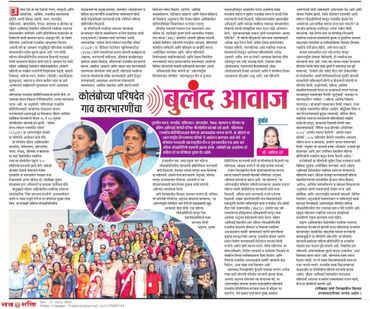
Capturing moments of hope and change

RSCD IN NEWS